Weighbridge Maintenance Checklist: Keep Your Weighing Accurate for Years
A weighbridge rarely fails dramatically. What usually happens is quieter: readings drift, a dispute over a delivered load takes longer to settle, or a queue builds because the operator no longer trusts the number on the indicator. By the time someone investigates, the cause is often mundane — a blocked drain, a damaged cable gland, or debris jammed between the deck and the frame. For a procurement team, the useful lesson is that maintenance is not only an operational chore; it is partly decided at the specification stage, by choosing a deck that is easy to inspect and protects its own load cells. This guide gives a practical routine for keeping a static weighbridge accurate, from the daily walk-around to calibration records and knowing when to involve the manufacturer. Jiajia Weighing is a weighing equipment manufacturer based in Yantai, Shandong, China, with in-house installation and maintenance teams.
Maintenance starts at the specification stage
The cheapest maintenance is the maintenance you design out. When two quotations look similar on capacity and price, the build description is where long-term upkeep is decided. A deck that keeps water away from its sensors, resists corrosion and stays mechanically stable under repeated loading will need far less attention than one that does not, regardless of who services it.
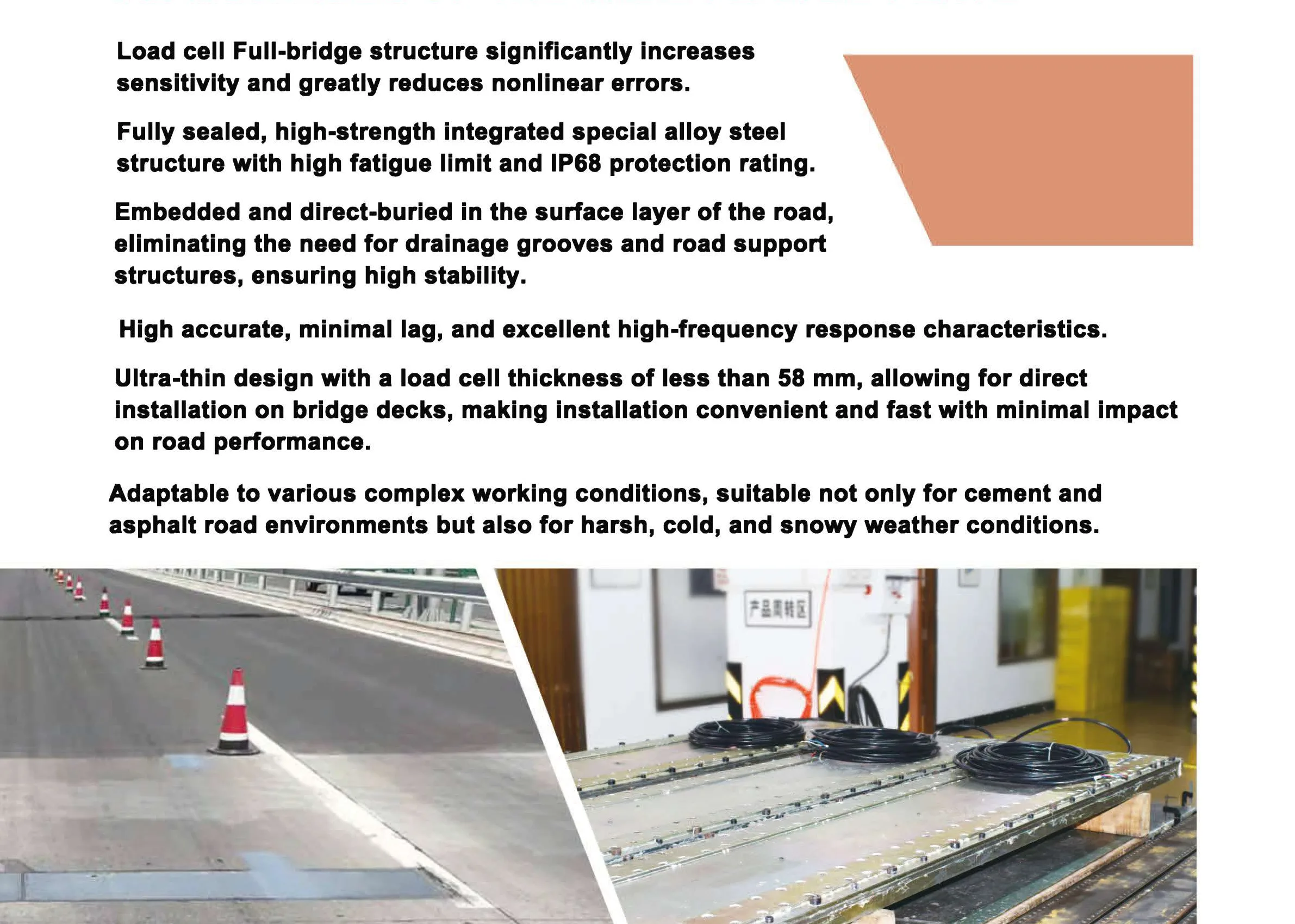
Our weighbridge decks are fully welded U-steel structures with sealed internal chambers that keep water and corrosive contamination out of the load-bearing sections. Each design passes 2,000,000-cycle third-party fatigue testing, and surface protection is Sa2.5 shot blasting followed by two coats of primer and two coats of finish at a dry film thickness of at least 120 microns. A cover-free deck structure shields the load cells and removes a whole category of routine cleaning, while a mid-span lap joint design avoids deck lifting or tipping and cuts lateral stress on the sensors. Robotic welding on all seams gives consistent penetration under heavy repeated loads.
None of this removes the need for inspection, but it changes the workload from constant correction to occasional verification. When you write the next specification, ask how the deck is sealed, how the load cells are accessed, and what the coating build is.
Daily and weekly walk-around
Most serious faults announce themselves early, and a short visual routine catches them. At the start of each shift, check that the indicator returns to a stable zero with nothing on the deck. A reading that will not settle, or that wanders with no load present, is the first sign of a mechanical bind, moisture in a junction box or a sensor problem — and it should be logged rather than reset and forgotten.
Walk the perimeter of the deck. Look for stones, hardened mud, scrap or product build-up wedged between the platform and the frame, because anything touching the deck can transfer load and distort the reading. Check for standing water, fresh impact damage, loose covers and anything that has shifted since the previous day. Confirm that cables are still clipped, undamaged and clear of vehicle paths, and that the indicator, printer or terminal is clean and reporting normally.
Once a week, go a little further: review the recorded weighings for unexplained patterns, compare inbound and outbound totals where your process allows it. Keep these observations in one log alongside any intervention. A written history turns a vague complaint — "the scale has been reading oddly" — into a diagnosable trend.
Drainage, pit and the surrounding apron
Water is the single most persistent enemy of a static weighbridge. Plan and protect drainage so that rainwater and wash-down water cannot pool under or around the deck, and keep channels, grates and soakaways clear of silt, leaves and spilled product.
Sealed internal chambers help the deck itself, but they are not a substitute for a working site drain; water that sits against the frame, the load-cell mounts and the cable entries will still find a way in. For a pit-mounted layout, make sure the pit can be entered safely for cleaning and inspection, and that there is a way to remove water. For a pitless layout, keep the void beneath the deck and the transition to the approach ramps free of debris. In both cases, sweep the apron and approaches regularly so that material tracked in by trucks is not gradually pushed into the gap around the platform.
Also watch the approaches themselves. Vehicles need a straight, level run to come to a complete stop fully on the deck; ruts, potholes or a crumbling ramp edge change how loads are applied and can make an otherwise healthy scale produce inconsistent results. Where the site is moving toward driverless operation, the drainage and housekeeping brief should be reviewed alongside the unattended weighing equipment, since there may be no operator on hand to notice a flooded pit.
Load cells, junction boxes and cabling
The load cells are the measuring heart of the installation, and most of their failures trace back to moisture or mechanical damage rather than to the sensing element wearing out. Inspect the seals and cable glands at each cell, confirm that junction box lids are closed and gaskets intact, and look for condensation or corrosion inside enclosures. Any sign of water at a connection deserves immediate attention, because intermittent faults here are notoriously hard to reproduce and easy to misdiagnose as an indicator problem.
Check that cables are routed away from moving parts, sharp edges and vehicle tyres, and that they are protected wherever they cross a traffic path. Look for crushed conduit, rodent damage, stretched loops and connectors that have worked loose from vibration. Keep the area around each mounting point clean enough that a leaking seal or a shifted shim is visible during the walk-around. If a cell does need replacing, using the correct spare part from the same product line keeps the calibration and mounting geometry consistent — see the load cells page for the range we supply.
Resist the temptation to open junction boxes casually or to re-terminate cables without a record. Every intervention should be logged with the date, the observation and what was changed.
Calibration, records and knowing when to call the manufacturer
Routine care keeps a scale healthy, but only verification against known loads confirms that it is accurate. Arrange calibration and verification at the interval required by your local metrology rules and your own quality system, and keep the certificates with the equipment log. Where a system carries a stated accuracy class, verification should be against that class — for context, our weigh-in-motion line is specified at ±0.5% dynamic accuracy (gross weight Class 1, single axle Class E) at traffic speeds from 1 to 100 km/h. The principle is the same for a static weighbridge: know the class you are working to, and record every check against it.
Watch for gradual drift rather than waiting for an obvious failure. A slow change in the difference between repeated weighings, a growing gap between inbound and outbound totals, or an increase in the number of results operators query are all reasons to bring verification forward. Record every calibration, every part replaced and every adjustment, so that a trend is visible to anyone reviewing the file.
Know where routine care ends and manufacturer support begins. Persistent zero instability, water inside an enclosure, physical damage to the deck or a reading that cannot be brought back into verification should be escalated rather than worked around. Because we keep R&D, manufacturing, installation and maintenance in-house, the same organisation that built the equipment can supply installation guidance, spare parts and service support; see the delivery and service page for what that covers. We are trusted in 70+ countries with 10,000+ units produced a year, so support and parts are not tied to a single installation.
Need a maintenance spare, a replacement load cell or an engineer's view on a persistent accuracy problem? Send the details through the contact page and our team will recommend the right parts or support, MOQ 1 unit, with no obligation.